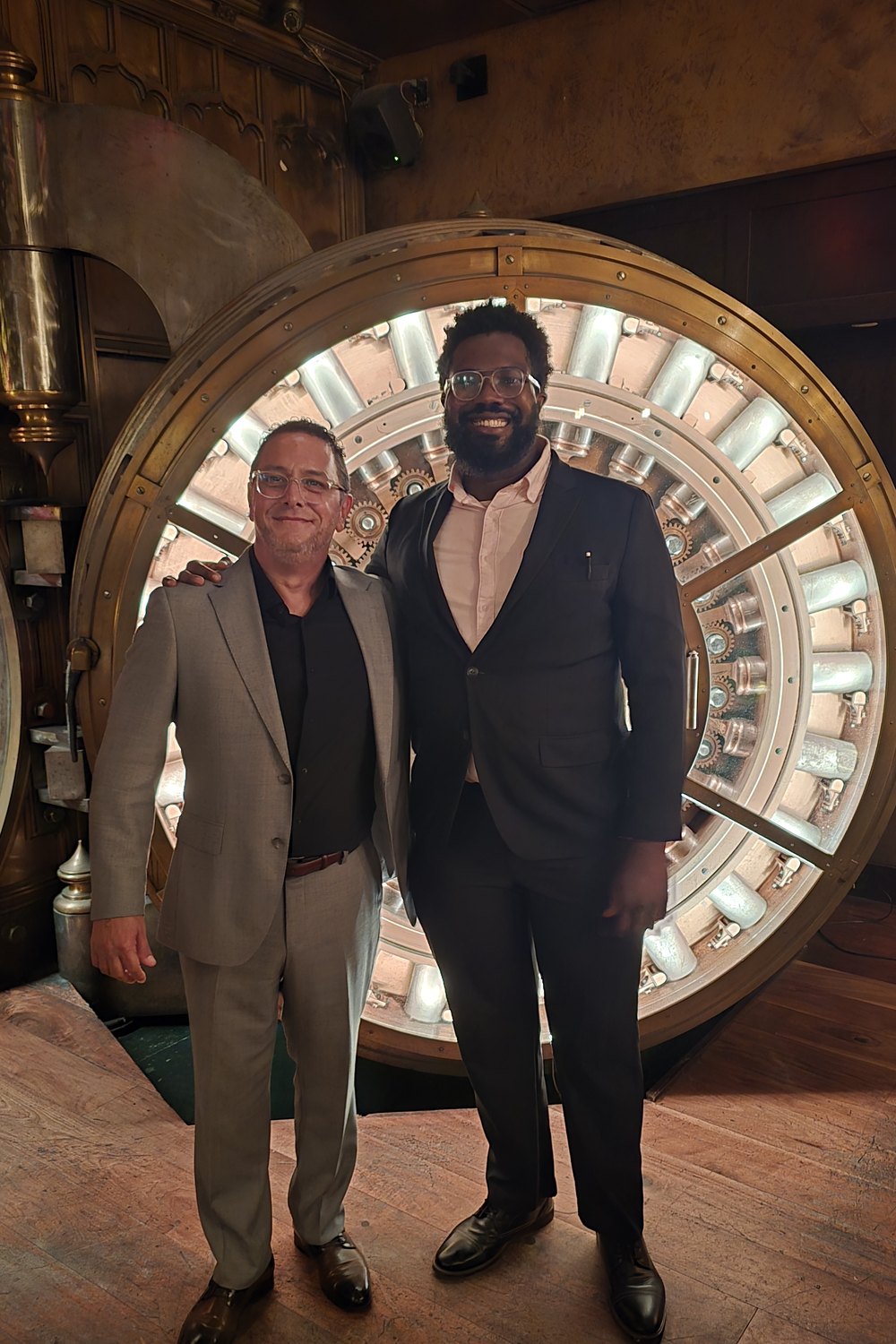
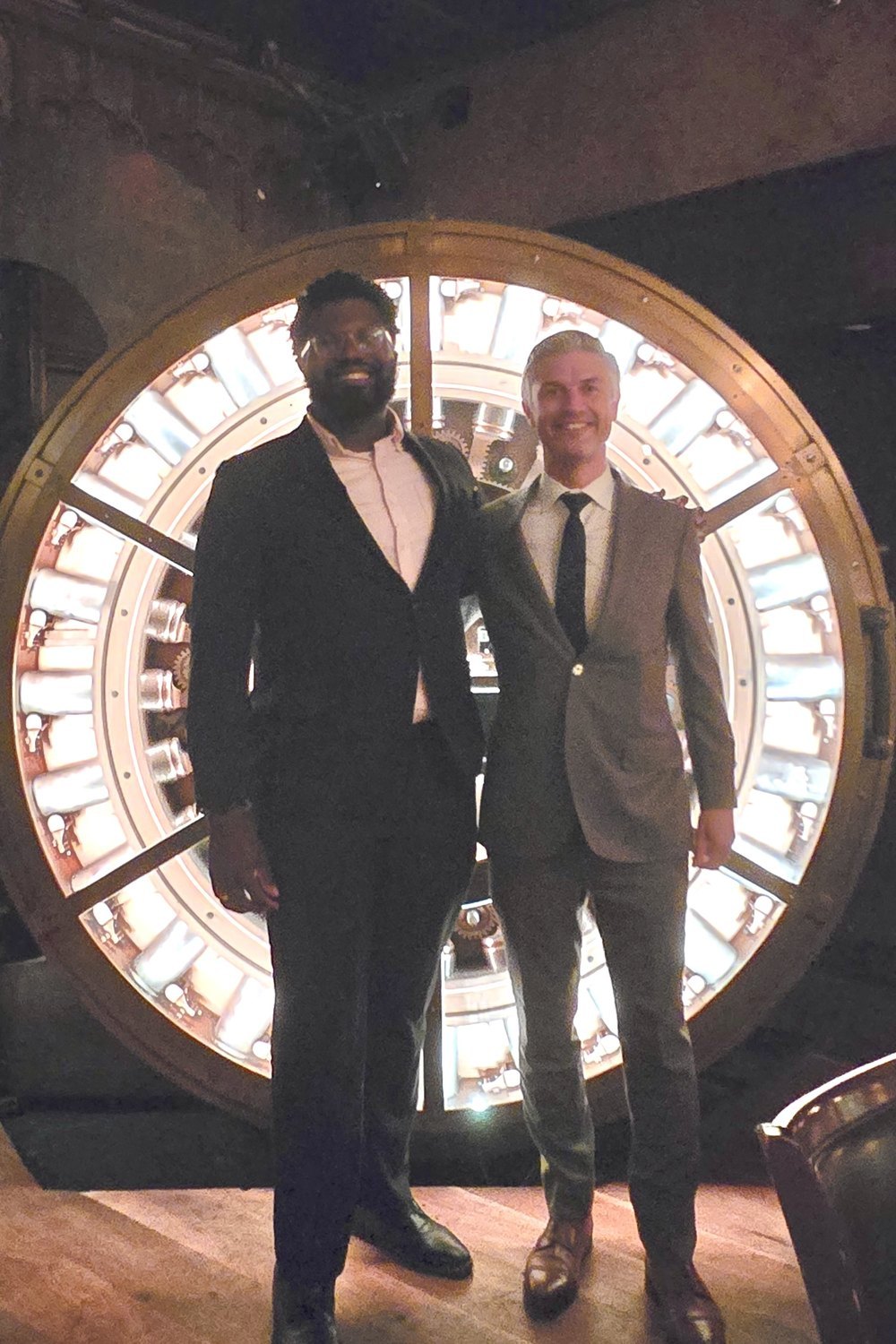
On August 26, twenty-four financial services executives spent an evening at The Vault at Trinity Place in Manhattan. The room was built in 1904 as a bank vault for the New York Realty Bank and is now a restaurant. We were there to work through a question that is getting harder to defer: how do you keep moving quickly on AI without losing control of the risk?
There was serious scale in the room. More than $11 trillion in combined assets, and institutions responsible for moving well over $10 trillion in payments on a typical business day. Banks, payments infrastructure, asset management, fintech, and the technology companies supporting all of them.
The theme of the evening was The Hidden Audit. I had the opportunity to lead the fireside conversation.
The argument I brought
Examiners are not grading your model. They are grading whether you can show who approved it, what data trained it, how it is being monitored, and what happens when it fails.
That distinction matters more than it first appears. The organizations that move quickly without creating friction are often not the ones with the best technology. They are the ones where the governance record already exists before anyone asks for it.
The gap is rarely missing controls. It is missing evidence of controls that already exist.
What I did not expect
I went in prepared to argue that point. What struck me instead was how universal the challenge has become. Nearly every organization in the room assumed it was the outlier.
The vocabulary differs by institution. A regional bank frames the problem around examination readiness. A payments institution frames it around operational resilience and uptime. A technology vendor frames it around what its clients will be asked to produce. Underneath the vocabulary, the question is the same one: who owns this decision, and can we show our work.
That assumption of isolation carries a cost. It leads institutions to build in private and to move slowly. It also leads them to treat a problem as novel when their peers worked through the same thing six months earlier. Conversations like this one are valuable because they show where the problems converge.
Where this leaves the work
There is a great deal of noise around AI right now, and much of it is about capability. I left the room more convinced that capability is not what will separate institutions over the next few years.
The organizations that win will not simply be the ones that adopt AI fastest. They will be the ones that can demonstrate they remained in control while they did. Those are different achievements, and only one of them is visible to a supervisor.
The setting turned out to be more apt than anyone planned. The dining room at Trinity Place was once the bank's executive board room. Decisions were made there, and presumably minuted. A century later we stood behind five inches of steel built to protect what a bank valued most, making the case that what now most needs protecting is the record of the decision itself.
With thanks
Thank you to Fred Schwark for hosting and for a genuinely sharp conversation. Thanks also to Javier López Ramos and the entire Coderio team for bringing the evening together. Convening a room like that one takes considerably more work than it appears from the inside.
Thanks as well to every executive who came and spoke candidly. The conversation was better for it.